Monday, October 24, 2016

Choose a Question

Goals:
Explain a science phenomenon that answers a third grader's question.

Agenda:
Warmup
Project Setup
Choose a Question
Answer the Question
Find Your Standard
Plan for Tomorrow

Warmup
How do effective teams work? Think about...

  • What do effective teams look and sound like?
  • How are effective teams managed?
  • How is the work divided?
Project Setup
  1. Choose roles for each member of your team. Consider roles such as facilitator, scribe, etc.
  2. Have your scribe make a copy of this Google doc and share it with your team members and me. 
Choose a Question
A few weeks ago I met with a third grade teacher at Rock Springs Elementary School. Her students came up with a list of questions about the world around them to guide your museum exhibits. 
  1. Look at this list of questions and choose one with your group. 
  2. Once you have chosen a question, tell me and I will sign you up. Only 1 group per question: first come, first served. 
Answer the Question
Work with your team to find the answer to your third graders' question. Record the answer on your Google Doc. You will need to refer back to this throughout the project so it's important you really understand the answer to the question. 

Here is a folder with the 3rd grade textbooks. You might be able to find some information there.

Find Your Standard
  1. Look at the list of third grade science standards and find the one that matches your question best.
  2. It's impossible to teach an entire science standard in your exhibit. Choose one evidence statement that matches your research question. 
  3. Record the standard and evidence statement on your Google Doc. 
Plan for Tomorrow
I won't be here tomorrow and you need to start brainstorming ideas for your exhibit because you begin building a prototype on Wednesday. Here's what you are going to do:
  1. Create a Padlet for your team. This is a webpage where you can share links, photos, etc. You will use this as an idea board where you put as many ideas for museum exhibits to answer your question as you can think of. 
  2. Copy the link to your Padlet and paste it into the Google Doc. 

Friday, October 21, 2016

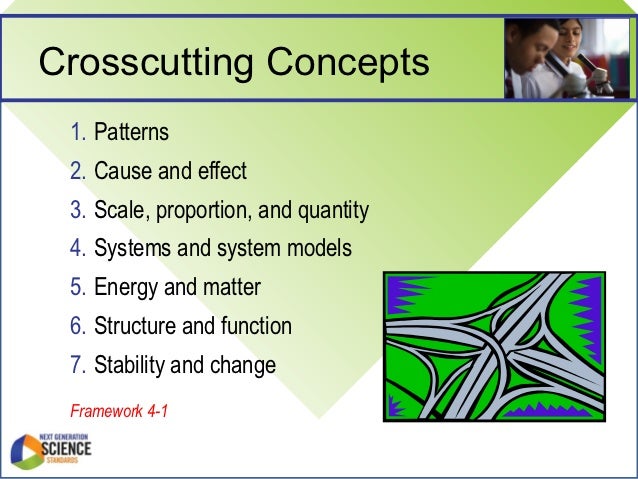
Crosscutting Concepts

Goal:
Use 2 crosscutting concepts to explain a scientific phenomenon. 


Agenda: 
Warmup
Seashells
What is Precipitation?
Precipitation Lab
Crosscutting Concepts

Warmup
Please send me the link to your portfolio using this form.

Seashells
Watch this and read this. What are seashells made of?
Mix calcium chloride with sodium carbonate. What happens?

What is Precipitation?
Learn why some things form solids when you mix them. 

Precipitation Lab
***DO NOT POUR ANYTHING DOWN THE DRAIN. IT'S LIKE A $20K FINE***
Mix together the different solutions in a well plate to figure out what is in the mystery solution. You will need to think about a strategy. You can use the whiteboards to make notes. 

Crosscutting Concepts
What Habits of Mind did you use to figure out the mystery solution? 
In our science standards we call these crosscutting concepts. 

Thursday, October 20, 2016

Badge Day!

Goal:
Earn badges by curating artifacts and reflecting on your progress towards being a practicing scientist.

Agenda:
Warmup
Technology
Work on Badges
Feedback

Warmup
  1. Grab a whiteboard and draw a line down the middle. 
  2. Label one side "Scientifically Minded Citizens" and the other side "Skilled Biotechnicians."
  3. With your group, brainstorm the skills and habits of mind of scientifically minded citizens and biotechnicians. Record your ideas on the whiteboards.
Technology
If you didn't do it last night, please sign up for a Wordpress account and download the Wordpress app on your iPad. Full tutorial can be found here. 
OR
Create a Google Drive folder entitled "Comp. X Badge Portfolio." Templates can be found here.

Work on Badges
If you finished the Analytical Techniques L1 badge on Blogger, request it now. 
  1. Join the badges Analytical Techniques L1 and/or Planning L1 on Badgelist. 
  2. Write the blog posts specified by the badge evidence tasks. 
  3. Before you post, make a category with the name of the badge. 
  4. Request the badge on Badgelist by submitting your category link. 
Feedback
On the provided paper, answer the following questions:
  1. What is 1 thing you like about Comp. X
  2. What is 1 area for improvement (for Comp. X)?

Tuesday, October 18, 2016

Chemical Elements Review

Goal:
Prepare for tomorrow's test.

Agenda:
Warmup-Journal Self-Score
Review Comp. Guide
Study!

Warmup-Journal Self Score

  1. Create a new journal entry entitled self-score
  2. Use the rubric in the sidebar (right) to give yourself a grade and justify why you deserve that grade. Also consider, have your work habits (effort, completion) been improving or declining this year?
Review Comp. Guide
  1. I will pass out the comp. guide to you. In the empty box, rate your understanding for each objective. 
    • +   if you get it
    • -    if you sort of get it
    • 0   if you don't get it'
  2. Star the objectives you need to work on the most today.
Study!
Use the provided resources to prepare yourself for tomorrow's test:

Monday, October 17, 2016

Changin'

Goals:
  • Define the Law of Conservation of Matter.
  • Describe the types and observable properties of changes that can happen to chemical elements. 
  • Use chemical equations as a model to classify chemical, physical, and nuclear changes. 
Agenda:
Warmup
Notes
Card Sort
CER


Warmup
In your "Counting Subatomic Particles" Exit Tickets last week some of you stated that the penny did not change into gold. What evidence did you use and why did you think that?


Notes
  1. Create a new journal entry entitled "Changes." 
  2. Create the following table in your journal
    Change
    Micro
    Macro
    Physical


    Chemical


    Nuclear


  3. Complete the table using these slides.


Card Sort

  1. Grab a whiteboard.
  2. Divide it into 3 sections.
  3. Label the sections "Chemical," "Physical," and "Nuclear."
  4. Sort the cards into the appropriate section.

CER
In your journal under your table, answer the following question using what you learned today as evidence and reasoning: 
What type of change would the penny need to undergo to become gold?